


Meaningful progress in treating cancer often starts at the molecular level. From developing chemical probes that interrogate protein function and validate new targets to refining how therapeutics are delivered directly to tumors, chemical innovation underpins tomorrow’s breakthrough medicines.
To accelerate progress in this area, The Mark Foundation for Cancer Research has partnered with the American Association for Cancer Research (AACR) to establish the AACR-Mark Foundation Chemistry in Cancer Research Grants.
This initiative backs chemists and chemical biologists tackling urgent challenges in cancer. The grants focus on high-impact areas such as advanced tumor delivery systems, novel conjugation chemistry, and induced proximity to modulate cancer-driving proteins.
Each grant provides $435,000 over three years to support research projects while connecting investigators through the Annual AACR Grantee Recognition Event and the Mark Foundation Scientific Symposium.
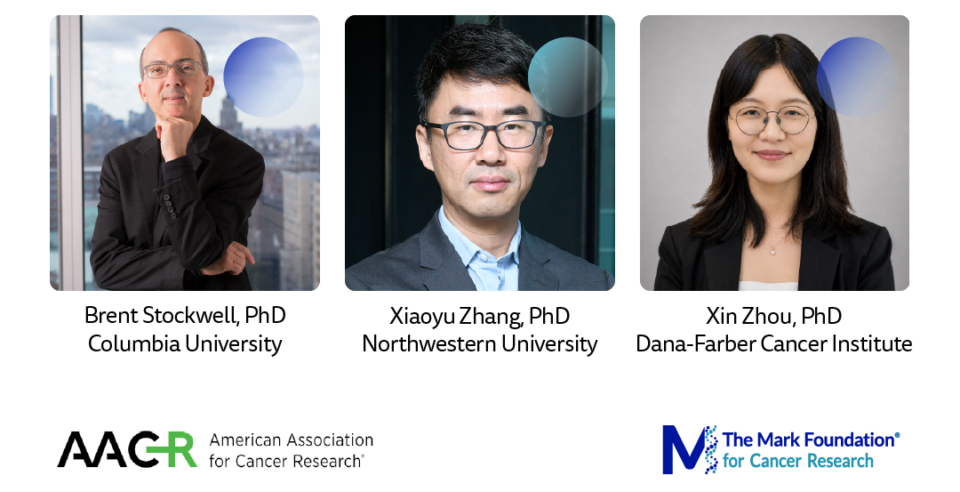
Meet the 2026 grantees and get to know their projects:
Brent Stockwell, PhD — Columbia University
Localized Small Molecule HCC Therapy Using Dual Tumor Antigen CAR iNKT Cell Prodrug Activation
Liver cancer (hepatocellular carcinoma) is one of the leading causes of cancer-related deaths worldwide. Existing systemic drug therapies often fail to reach high enough concentrations in the tumor or cause severe side effects by damaging healthy liver and bodily tissues.
Project Strategy
Dr. Stockwell’s team is developing a targeted two-part treatment that activates potent cancer-killing agents exclusively at the tumor site. They are engineering immune cells (CAR iNKT cells) that produce specific drug-activating enzymes only after recognizing two distinct tumor markers at the same time. When an inactive drug (a prodrug) circulates through the body, it remains harmless until it reaches the tumor, where these localized enzymes cleave the drug into its active, cancer-fighting form.
“This award will catalyze a critical new project that has the potential to open a new class of precision cancer therapies, combining the excitement of chemical biology and engineered immune cells.”
Xiaoyu Zhang, PhD, Northwestern University
Chemical Reprogramming of FBXW7 Cancer Mutations
Normal cells rely on a tumor-suppressing protein called FBXW7 to identify cancer-driving proteins and flag them for natural cellular disposal. In many colorectal and endometrial cancers, FBXW7 is mutated, preventing it from binding to its targets and allowing cancer-promoting proteins to accumulate.
Project Strategy
Rather than trying to drug downstream proteins that have piled up, Dr. Zhang’s laboratory is designing small chemical molecules that directly interact with the mutated FBXW7. These molecules aim to reprogram the mutant protein, restoring its ability to flag disease-relevant proteins for degradation and reactivating the cell’s natural tumor-suppressing controls.
“The AACR-Mark Foundation Chemistry in Cancer Research Grant will provide critical support to establish an innovative research direction focused on chemically reprogramming cancer-associated protein mutations. This support will accelerate my research program and career development while advancing new therapeutic strategies for cancer with broad applicability.”
Xin Zhou, PhD, Dana-Farber Cancer Institute and Harvard Medical School
Chemically Programmable CDK12 Degrader-ADCs for Solid Tumors
An enzyme called CDK12 plays a central role in helping aggressive solid tumors survive and repair DNA damage. While CDK12 is a compelling cancer target, traditional drugs that block it throughout the body are toxic at the levels often needed to meaningfully treat the cancer.
Project Strategy
Dr. Zhou’s laboratory is combining protein engineering with targeted protein degradation to design antibody-drug conjugates (ADCs). The antibody serves as a vehicle that binds selectively to tumor cells and delivers a CDK12 “degrader” directly inside. Once internalized, the payload directs the cell’s internal disposal systems to eliminate CDK12—destroying the tumor’s survival machinery while sparing healthy tissues from toxic exposure.
“Receiving this grant would provide support for our team and collaborators to pursue an exciting new research direction. If successful, this work will enable targeting of a well-validated pathway that remains difficult to drug while accelerating the growth of my research program at an important early stage of my career.”
Catalyzing Discovery Through Philanthropic Collaboration
Groundbreaking cancer research accelerates when philanthropic and scientific organizations align around a shared mission. Through our partnership with the AACR, we are proud to provide these exceptional researchers with multi-year resources and collaborative platforms to advance their findings from initial synthesis to clinical application.